
Confluence PE Prep
Environmental PE exam resources
Sustainability became its own knowledge area in April 2026, worth 7 to 11 questions. Most legacy materials never covered it. Here is what it tests and how to prepare without overspending your hours.

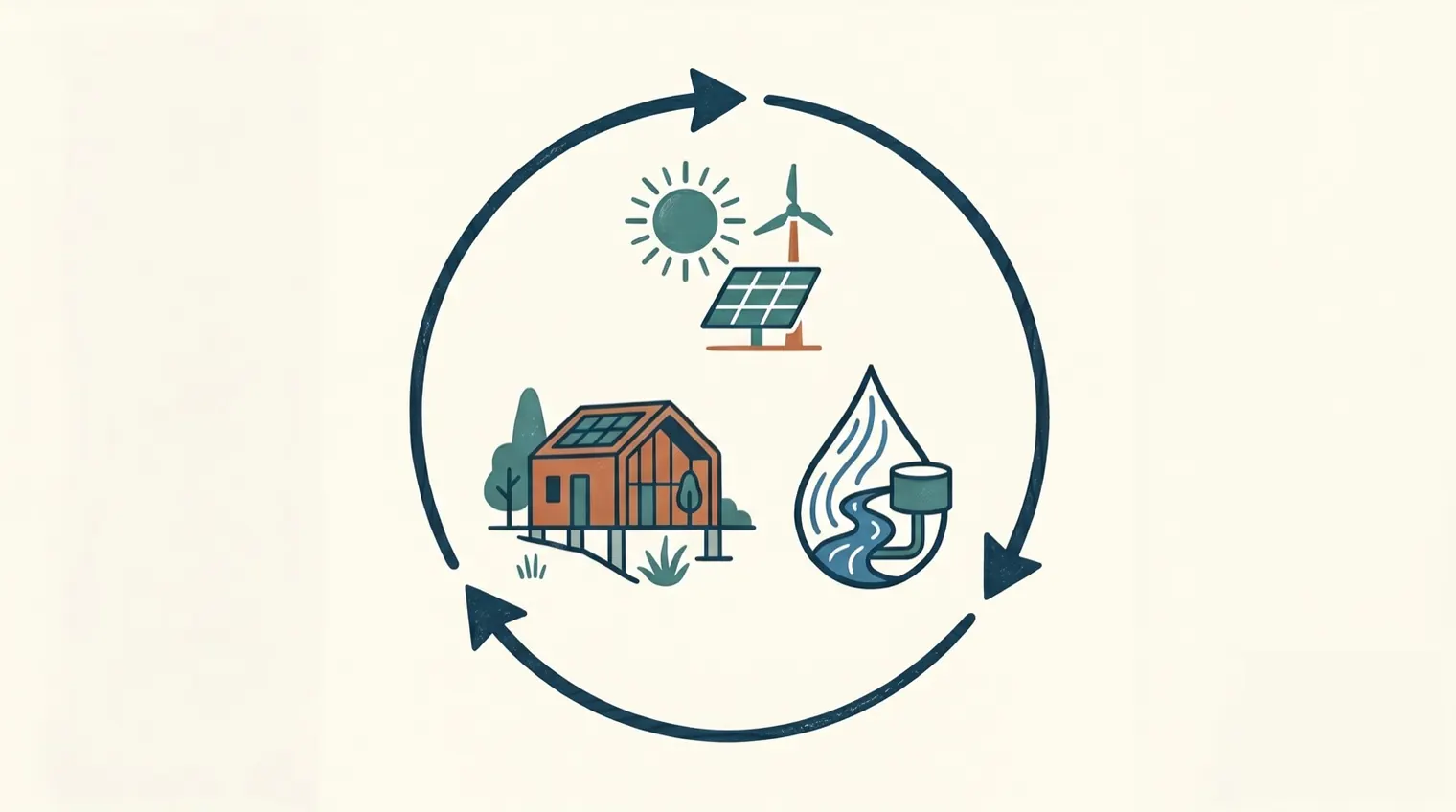
Sustainability is a dedicated knowledge area added to the Environmental PE in the April 2026 spec, worth 7 to 11 questions (about 9 to 14 percent of the exam). It covers two subtopics, resources conservation and resilience, and tends to be conceptual, with calculation potential in life-cycle analysis, GHG accounting, and reliability.
Older reference manuals and practice exams do not cover Sustainability as a standalone area. If your materials predate April 2026, this is the most likely gap in your preparation.
It is one of the smaller areas, similar in weight to Environmental and Occupational Health. That is exactly why it is worth a focused block of study: the content is finite, the competition for prepared material is thin, and a handful of questions can decide a borderline result. (As a brand-new section, there is no historical question data yet, so treat the calculation-versus-concept balance as an estimate.)
The NCEES specification splits Sustainability into two subtopics.
Using energy and materials efficiently and accounting for environmental impact over a product or system's life.
Keeping infrastructure functioning under stress, from component reliability to climate impacts.
A few facts and relationships come up reliably in this material. I verified the items below against the NCEES Environmental PE Reference Handbook.
| Concept | What to know |
|---|---|
| LCA phases | Four phases under ISO 14040 / 14044: goal and scope definition, inventory analysis, impact assessment, and interpretation. All compared options share one functional unit. |
| System boundaries | Cradle-to-grave, cradle-to-gate, gate-to-gate, and cradle-to-cradle (closed loop). |
| GHG scopes | Scope 1 (direct), Scope 2 (purchased energy), Scope 3 (other indirect, supply chain). |
| GWP values | The handbook table uses 1990 IPCC figures (CO₂ = 1, CH₄ = 21, N₂O = 290). These differ from modern AR5/AR6 numbers. Use the handbook's values on exam day. |
| System reliability | Series: R = R₁ × R₂ × … Parallel: R = 1 − (1−R₁)(1−R₂)… Availability = MTBF / (MTBF + MTTR). |
| Frameworks | LEED credit categories, ISO 14001 (plan-do-check-act EMS), and the triple bottom line (people, profit, planet). |
| Verified against research-grade notes checked directly against the NCEES Environmental PE Reference Handbook (2026 edition). | |
The GWP values are a classic trap. If you have practiced with modern climate figures, you may "know" methane's GWP is in the high 20s or low 30s. The handbook prints 21. On a closed-book exam, the handbook is the authority, so anchor to its table rather than to memory.
Treat most of this section as concepts and definitions to memorize, then add a short set of calculation reps for life-cycle analysis, greenhouse gas aggregation, and reliability. A few focused hours go a long way here because the material is bounded and the formulas are simple.
Because the section leans conceptual, flashcard-style recall (LCA phases, GHG scopes, system boundary types, framework names) is efficient. Reserve a smaller block for the handful of formulas so a calculation question does not catch you off guard. For how this fits the rest of your plan, see how many hours to study for the Environmental PE and the full 2026 exam breakdown.
A focused guide to the new Sustainability area and Environmental and Occupational Health, built natively for the April 2026 spec. Join the free study plan to be notified when it launches.
A dedicated knowledge area added in the April 2026 NCEES specification, worth 7 to 11 questions. It covers resources conservation and resilience, including life-cycle analysis, greenhouse gas accounting, and system reliability.
7 to 11 questions out of 80, roughly 9 to 14 percent of the exam. The exact number varies between exam forms.
Expect it to lean conceptual, with definitions and frameworks dominating. There is calculation potential in life-cycle analysis, greenhouse gas aggregation, and reliability, so prepare for a mix weighted toward concepts.
Because the dedicated Sustainability area is new as of April 2026. Reference manuals and practice sets written for earlier specifications treat sustainability topics, if at all, as scattered mentions rather than a named section.
Use the values printed in the exam handbook, which are based on 1990 IPCC figures (for example, methane at 21). These differ from the modern AR5/AR6 numbers you may have seen elsewhere, and the handbook governs on exam day.